
Portugal is going through one of the most intense real estate cycles of recent decades. Investment in construction is growing, licensing for new housing units is accelerating, and asset appreciation continues to shape market dynamics, especially in urban areas and in segments more exposed to international demand, tourism, logistics and institutional investment.
After years in which location seemed to explain almost everything, it is becoming increasingly clear that the value of a building no longer depends only on square metres, expected rent or scarcity of supply. It increasingly depends on how that building performs over time.
A building that consumes too much energy, manages water poorly, provides inadequate comfort conditions or lacks consistent data on its environmental performance begins to carry a risk that the market can no longer ignore. It may still be well located, it may still attract demand and it may even generate income in the short term. But it carries a growing weakness: it is not prepared for a context in which investors, occupiers, banks, regulators and companies demand evidence, transparency and performance.
This is where sustainability ceases to be a peripheral issue. We are not simply dealing with a reputational concern, nor with another layer of green communication. We are facing a profound change in the way real estate assets are assessed, financed, managed and compared.
Building more does not necessarily mean building better. And in a country that is once again building and refurbishing at pace, the decisive question may no longer be only how many buildings we will bring to the market, but what quality those buildings will have in ten, twenty or thirty years’ time.
The construction and use of buildings continue to account for a significant share of energy consumption and carbon emissions in Europe. Every new real estate cycle therefore brings with it an added responsibility. It can create long-term value, or it can accumulate environmental, operational and financial liabilities that will only become visible later.
It is in this context that BREEAM In-Use certification becomes relevant. Not as a decorative label, nor as a marketing element for institutional reports, but as a tool for diagnosing, managing and enhancing the value of buildings that are already in operation.
The Main Challenge Lies in Existing Buildings
BREEAM is now one of the most internationally recognised sustainability certification methodologies. Created in the United Kingdom in 1990, it has become a reference for assessing the environmental performance of buildings and promoting best practices in construction and real estate management.
However, there is an important distinction to understand.
While certification for new construction assesses buildings at the design or development stage, BREEAM In-Use was created for buildings that already exist and are in operation. This difference may seem technical, but it is strategic. Assessing a building on paper is one thing. Assessing how it works in everyday use is something quite different.
In the Portuguese context, this distinction is even more important because most of the built environment already exists. The scope for transformation does not lie only in new developments, however relevant they may be. It lies above all in buildings that are already standing, that consume energy every day, that host workers, residents, customers and visitors, that require maintenance, that age, and that can gain or lose competitiveness depending on how they are managed.
Improving the performance of these assets can mean reducing operating costs, cutting waste, increasing user comfort, extending the useful life of buildings and strengthening their attractiveness in the market. Sustainability therefore stops being a generic intention and becomes a management practice. It is measured, compared, documented and improved.
Why This Has Become Relevant for the Portuguese Market
For a long time, sustainability in real estate was treated as an additional concern. It was desirable, but rarely decisive. It helped differentiate some more sophisticated projects, but it did not seriously affect access to capital, asset liquidity or the ability to attract demanding occupiers.
That time is disappearing.
Capital has changed its language. Real estate funds, insurers, banks, institutional investors and family offices now look at assets with growing concern around ESG criteria. It is no longer enough to claim that a building is efficient or sustainable. It must be demonstrated through data, metrics and recognised certifications.
An asset without organised information on its performance becomes harder to assess, harder to compare and, in many cases, more vulnerable to future devaluation.
Occupiers are also changing. Companies that have made environmental and social commitments cannot, for reasons of coherence and because of the expectations of their own stakeholders, continue indefinitely to operate in buildings that contradict those commitments. The quality of the workplace, health, thermal comfort, indoor air quality and consumption efficiency have ceased to be technical details and have become part of the building’s own value proposition.
At the same time, competition between assets is likely to increase. As newer, more efficient buildings enter the market, better prepared to respond to sustainability requirements, existing assets will come under pressure. This will be particularly visible in segments such as offices, logistics, hospitality, retail and build-to-rent, where comparison between buildings is more direct and occupiers have greater choice.
In this context, BREEAM In-Use can function as a strategic reading mechanism. It helps owners, developers and asset managers understand where they stand, what weaknesses exist, which improvements should be prioritised and what path can be followed to enhance the building’s value without falling into the illusion that everything has to be solved at once.
A Certification That Requires Better Knowledge of the Building
The greatest merit of BREEAM In-Use does not lie only in the final rating. It lies in the process that leads to that rating.
Certification begins with a structured reading of the building, its management practices, consumption patterns, systems, maintenance and the experience it provides to users. This reading helps identify problems that often already exist but remain invisible because no one measures them in an integrated way.
There are buildings where people know how much is paid for energy, but do not truly understand where waste occurs. There are buildings where investment is made in new equipment, but without a global view of performance. There are buildings where management is reactive, when it should be preventive and data-driven.
BREEAM In-Use helps organise that vision. It does not transform a building by magic, nor does it remove the need for investment. But it creates a clearer decision-making framework. It makes it possible to understand which measures have the greatest impact, which interventions can be phased, which costs can be avoided and which improvements contribute both to reducing risk and increasing value.
This approach is particularly important because not all buildings start from the same point, and not all owners have the same investment capacity. In many cases, the issue is not to achieve the highest rating immediately, but to begin a consistent path of improvement.
Small interventions, when well chosen, can produce relevant gains. Organising information, improving maintenance procedures, monitoring consumption, reviewing management practices or identifying efficiency measures can be the first step towards a deeper transformation.
Certification therefore works as a compass. It is not the destination. It is the instrument that helps choose the path more wisely.
The Portuguese Example Is Beginning to Gain Ground
Portugal is already showing signs of maturity in this field. The case of the Q51 Building, in the Quinta da Fonte Business Ecosystem, which achieved an Outstanding rating in BREEAM In-Use Part 2, shows that it is possible to raise ambition also in the Portuguese market.
This is not only about celebrating a high rating. It is about recognising that there is demand, technical competence and execution capacity to position Portuguese assets in line with international best practices.
This type of example is relevant because it raises the bar. It shows that sustainability in Portuguese real estate does not have to be confined to minimum legal compliance or to the energy performance certificate. It can be integrated into a more demanding asset management logic, in which efficiency, comfort, environmental performance and financial value reinforce one another.
Still, it is important to avoid naivety. The path is not simple. Portugal continues to face well-known obstacles, from slow licensing procedures to the fragmentation of responsibilities between owners, managers, operators and users. In many cases, there is still a technical management culture that is too focused on immediately solving problems and not sufficiently oriented towards continuous performance improvement.
There is also a tendency to confuse sustainability with equipment replacement. Replacing HVAC systems, installing technology or improving lighting may be necessary, but it is rarely enough. The performance of a building results from the interaction between the building envelope, technical systems, operation, maintenance, occupancy, user behaviour and quality of management.
When we look at only one piece, we lose sight of the whole.
That is why real estate sustainability is not merely an engineering issue. It is a matter of strategic management.
Sustainability as Value Protection
The conversation about sustainable buildings is still often dominated by cost. How much does certification cost? How much does intervention cost? How much does improvement cost?
These are legitimate questions, but incomplete ones. The reverse question is becoming increasingly important: how much does inaction cost?
How much does it cost to maintain an energy-inefficient building in a context of volatile energy prices? How much does it cost to lose attractiveness among occupiers looking for healthier spaces aligned with their ESG commitments? How much does it cost to see an asset become less liquid because it lacks robust data on its performance? How much does it cost to postpone interventions until regulation, the market or financing conditions leave no room for choice?
Sustainability should be understood as value protection. It protects against excessive operating costs, obsolescence, loss of competitiveness and the risk of future devaluation. At the same time, it can create additional value by making the asset more transparent, more efficient, more comfortable and better prepared to respond to market demands.
This is perhaps the most important cultural shift.
BREEAM In-Use should not be seen only as an environmental certification. It should be seen as a property management tool. It helps us look at a building not as a static object, but as a living asset that consumes resources, hosts people, requires decisions and can either improve or deteriorate depending on the quality of its management.
The Time to Act Is Now
Portugal’s current real estate cycle will be assessed in the future not only by the quantity of construction it produced, but by the quality of the assets it left behind.
If this momentum merely adds square metres to the market, we may be creating short-term value and long-term problems. If, on the other hand, it is used to improve the efficiency, resilience and performance of buildings, it can become an opportunity to modernise the sector and better prepare the national built environment.
For developers, owners, asset managers and investors, sustainability should not be left until the end of the process. The later it enters, the more expensive, limited and reactive it tends to be. When considered early, it makes it possible to plan better, prioritise investments, reduce waste and build a stronger value narrative for the market.
At Plan4Sustain, we help organisations turn this path into practical decisions. We support diagnosis, priority-setting, indicator structuring and preparation for certifications such as BREEAM In-Use, always with one central concern: connecting sustainability to performance, value and real impact.
Because the future of real estate will not only be built. It will have to be measured, managed and improved.
Excerpt written by Vítor Ferreira
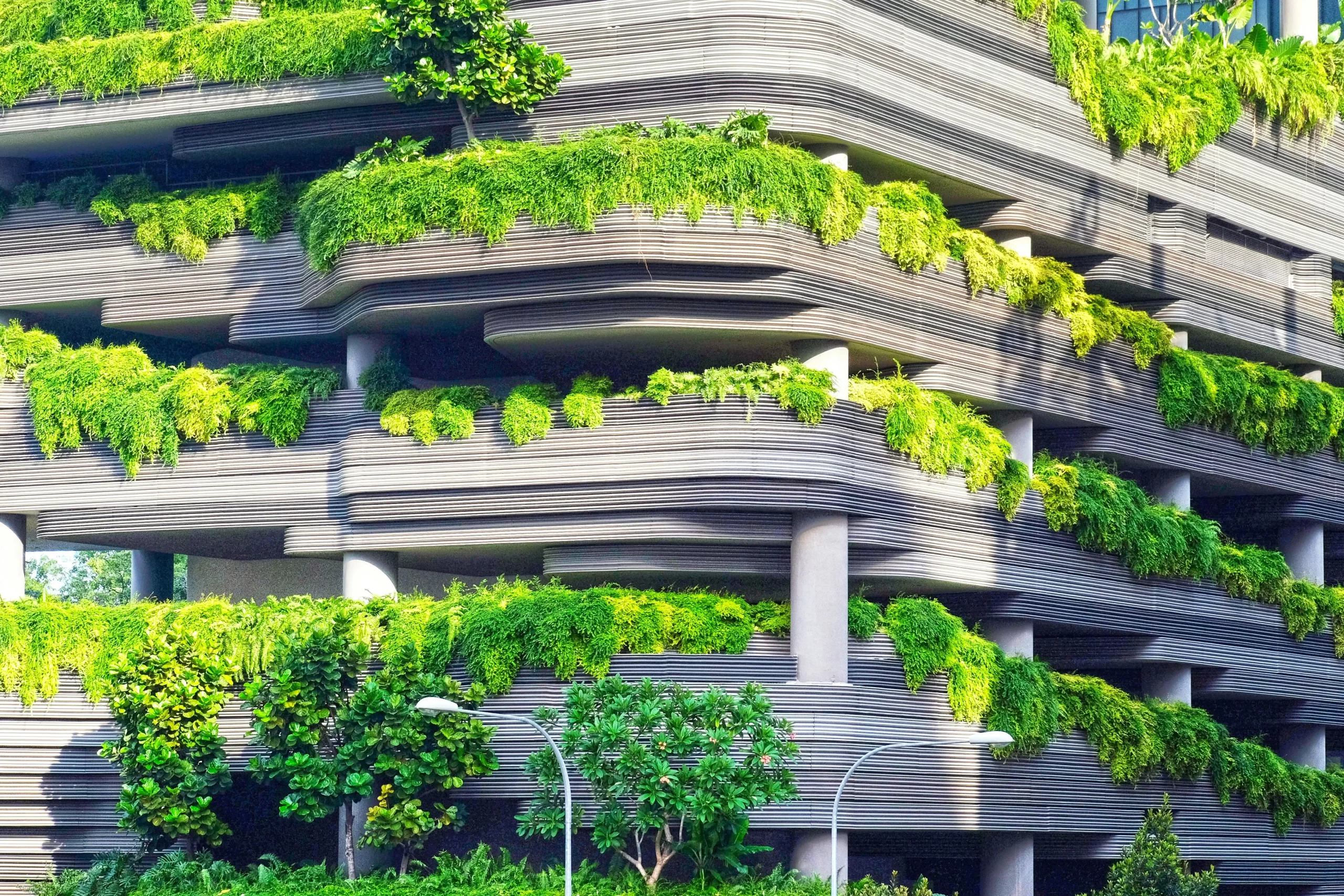
*Cover photo by Danist Soh on Unsplash

